
Best Car Insurance for Full Coverage — Louisiana
Free to compare
Full Coverage for Multiple Vehicles in Louisiana
You own two or more vehicles in Louisiana and need full-coverage insurance—liability plus collision, comprehensive, and uninsured-motorist protection—on every car. You know the state minimum is $15,000 per person, $30,000 per accident for bodily injury, and $25,000 for property damage, but full coverage goes beyond that floor. You're comparing carriers to find the policy structure that fits your household's vehicles without overpaying or leaving gaps.
Full coverage is not a legal term. It describes a policy that combines Louisiana's mandatory liability minimum with collision coverage (pays for damage to your car in an at-fault crash), comprehensive coverage (pays for theft, weather, vandalism), and uninsured-motorist coverage (protects you when the other driver has no insurance or insufficient limits). Nineteen carriers write full-coverage policies in Louisiana, but policy structure—how deductibles work across vehicles, whether the multi-car discount applies to every coverage line, and how uninsured-motorist limits stack—varies enough to matter when you're insuring multiple cars.
“A smaller discount on a lower base rate can cost less than a larger discount on a higher base rate when you're insuring multiple vehicles.”

Get More Than the Louisiana Minimum for Less
Get My Louisiana Car Insurance Quote19 carriers
Louisiana Full-Coverage Writers
Nineteen carriers write standard and non-standard full-coverage auto policies in Louisiana, including State Farm, Geico, Progressive, Allstate, USAA, Farmers, Travelers, Liberty Mutual, and eleven others. Not every carrier writes multi-car policies with identical discount structures or deductible options.
Louisiana carrier roster, 2025
What Full Coverage Actually Covers on a Multi-Car Policy
Full coverage on a multi-car policy means every vehicle carries liability at or above Louisiana's $15,000/$30,000/$25,000 minimum, plus collision and comprehensive with deductibles you choose, plus uninsured-motorist coverage. Liability pays the other party's bills when you cause a crash. Collision pays to repair your car after an at-fault accident or a crash with an object. Comprehensive pays for non-collision damage: theft, hail, flood, fire, vandalism, hitting an animal. Uninsured-motorist coverage pays your medical bills and lost wages when the at-fault driver has no insurance or insufficient limits.
On a multi-car policy, each vehicle gets its own collision and comprehensive deductible—typically $500 or $1,000—but some carriers let you choose different deductibles per vehicle. Liability and uninsured-motorist limits apply per accident, not per vehicle, so one policy covering three cars still has one $30,000 per-accident bodily-injury cap unless you buy higher limits. That structure matters when a crash involves multiple household vehicles or when one vehicle is totaled and another is damaged in the same incident.
Louisiana does not mandate uninsured-motorist coverage, but 11.7% of Louisiana drivers are uninsured—one in nine—so most households add it. Some carriers bundle uninsured-motorist coverage into the full-coverage package at a fixed limit; others let you choose limits separately. The difference shows up at claim time: a bundled policy might cap uninsured-motorist coverage at your liability limit, while a standalone endorsement lets you buy higher protection.
The multi-car discount applies to liability on most carriers' policies, but collision and comprehensive premiums are vehicle-specific—year, make, model, garaging ZIP, and driver assignment all re-rate each car individually. A household with a 2015 sedan and a 2023 truck pays different collision premiums for each vehicle even though both sit on the same policy. The discount saves money on the liability portion; the collision and comprehensive portions reflect each vehicle's risk profile.
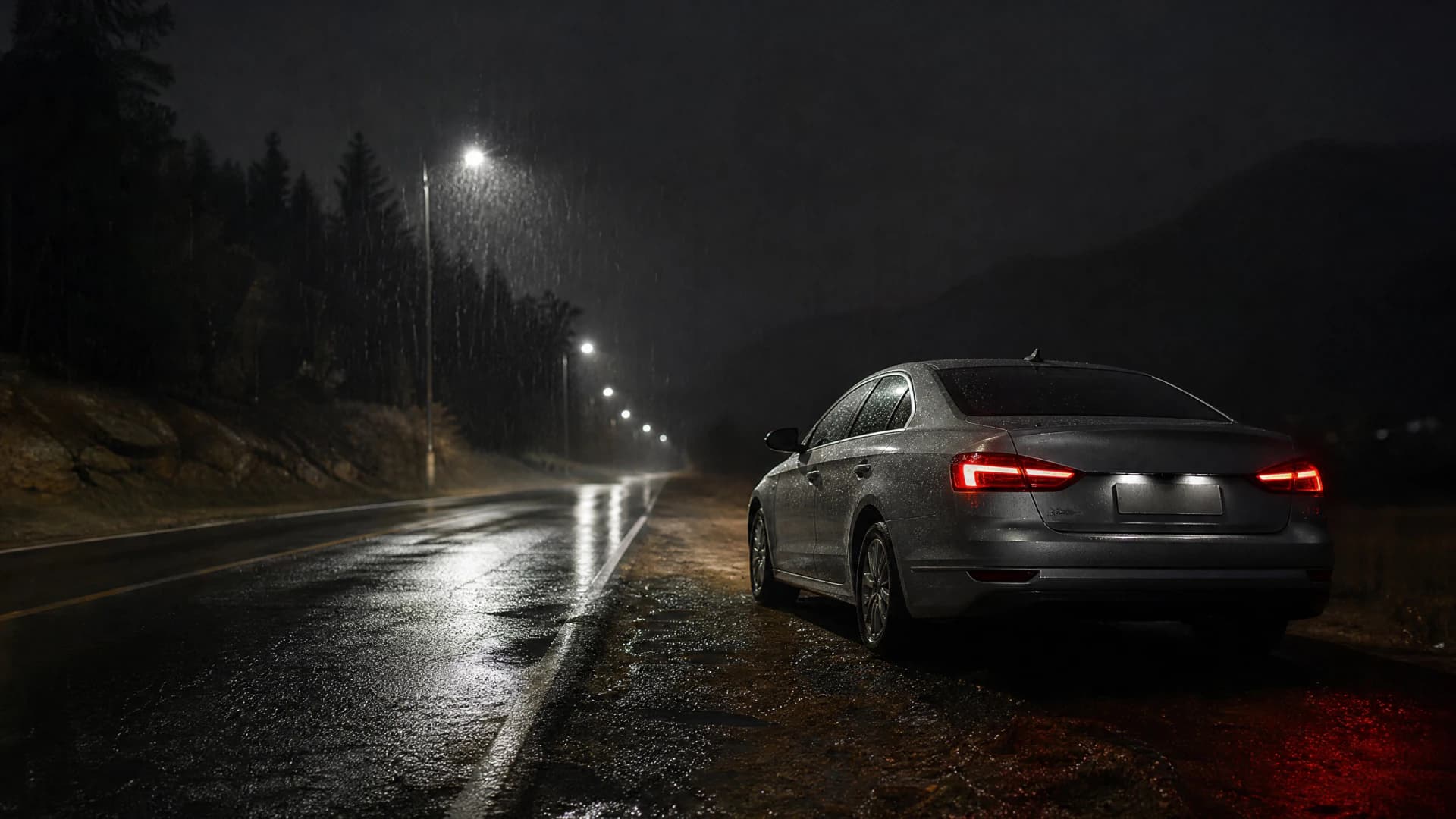
Louisiana does not require uninsured-motorist coverage, but 11.7% of drivers are uninsured. Full coverage without uninsured-motorist protection leaves you paying out-of-pocket when an uninsured driver hits your car.
Related Articles




How Policy Structure Changes Household Cost
A smaller multi-car discount on a lower base rate can cost less than a larger discount on a higher base rate. Carriers price collision and comprehensive coverage differently: one carrier might charge more for collision on a 2023 truck but less for comprehensive on a 2015 sedan, while another reverses that pattern. When you're insuring multiple vehicles, the household total depends on how each carrier prices each vehicle's collision and comprehensive coverage, not just the size of the multi-car discount.
Deductible structure matters. Some carriers let you choose a $500 deductible on one vehicle and a $1,000 deductible on another; others require the same deductible across all vehicles on the policy. A household with one high-value vehicle and two older cars might save money by carrying a lower deductible on the high-value car and a higher deductible on the older ones, but only if the carrier allows per-vehicle deductible selection. If the carrier requires uniform deductibles, you pay for lower deductibles on vehicles where you don't need them or accept higher deductibles on vehicles where you want more protection.
Uninsured-motorist coverage structure varies. Some carriers bundle uninsured-motorist coverage into the full-coverage package at your liability limit—if you carry $30,000 per accident in liability, you get $30,000 in uninsured-motorist coverage automatically. Other carriers sell uninsured-motorist coverage as a separate endorsement, letting you buy higher limits than your liability floor.
The multi-car discount requires every vehicle to sit on the same policy and, on most carriers' policies, to garage at the same address. A household with one vehicle garaged at a second address—a college student's car, a work vehicle parked at a job site, or a classic car stored off-site—might not qualify for the multi-car discount on that vehicle unless the carrier allows split garaging. Check garaging rules when you compare quotes; losing the discount on one vehicle can erase the savings from adding it to the policy.
$15,000 / $30,000 / $25,000
Louisiana Liability Minimum
Louisiana requires $15,000 per person and $30,000 per accident for bodily injury, plus $25,000 for property damage. Full coverage adds collision, comprehensive, and uninsured-motorist protection on top of this floor.
Louisiana Office of Motor Vehicles

Comparing Carriers for Your Household
Get quotes from at least three carriers. Provide the same vehicle details, driver information, coverage limits, and deductibles to every carrier so you're comparing identical policy structures. Ask each carrier whether they allow per-vehicle deductible selection, how the multi-car discount applies to liability versus collision and comprehensive, and whether uninsured-motorist coverage is bundled or sold separately. Those three answers tell you whether the policy structure fits your household's vehicles.
If your household includes a high-risk driver—a teen, a driver with a recent violation, or a driver with a lapse—ask whether that driver's assignment to a specific vehicle changes the household premium. Some carriers let you assign the high-risk driver to the lowest-value vehicle to minimize the collision and comprehensive premium increase; others rate the entire policy based on the highest-risk driver regardless of vehicle assignment. The difference can be hundreds of dollars per year on a multi-car policy.
Next Step: Compare Full-Coverage Policies
You now know that full coverage in Louisiana combines the state's $15,000/$30,000/$25,000 liability minimum with collision, comprehensive, and uninsured-motorist coverage, and that policy structure—deductible flexibility, multi-car discount application, and uninsured-motorist bundling—varies across the nineteen carriers writing in Louisiana. Compare quotes from State Farm, Geico, Progressive, Allstate, USAA, Farmers, and other carriers on the list above. Provide identical vehicle and driver details to every carrier, ask about per-vehicle deductible options and uninsured-motorist limits, and compare the household total across all vehicles. Use the comparison tool on this site to see which carriers write full-coverage policies for your household's vehicles and get quotes that reflect Louisiana's requirements and your household's structure.
Carriers Writing Full Coverage for Louisiana Households
State Farm, Geico, Progressive, Allstate, USAA, and Farmers write standard full-coverage policies with multi-car discounts. State Farm and USAA are preferred-tier carriers; Geico, Progressive, Allstate, and Farmers write standard-tier policies. Travelers writes standard full-coverage policies with a non-owner option. Liberty Mutual writes standard full-coverage policies with SR-22 filing capability. Amica, Auto Club Enterprises, Hartford, and Shelter write standard full-coverage policies; Amica is a preferred-tier carrier. Clearcover and Root are online-only carriers writing standard full-coverage policies in Louisiana; Root writes SR-22 policies and after-DUI coverage.
Bristol West, Direct Auto, National General, and The General write non-standard full-coverage policies for households with violations, lapses, or high-risk drivers. Bristol West, Direct Auto, and The General write SR-22 and non-owner policies. National General writes SR-22 and after-DUI coverage. Southern Farm Bureau writes standard full-coverage policies through brokers only. Not every carrier on this list writes multi-car policies with identical deductible options or uninsured-motorist bundling; compare policy structure when you get quotes.
Get Your Free Quote
Get My Louisiana Car Insurance QuoteFrequently Asked Questions
What does full coverage car insurance include in Louisiana?
Full coverage in Louisiana combines the state's mandatory liability minimum ($15,000 per person, $30,000 per accident for bodily injury, $25,000 for property damage) with collision coverage, comprehensive coverage, and uninsured-motorist coverage. Collision pays for damage to your car in an at-fault crash; comprehensive pays for theft, weather, and vandalism; uninsured-motorist coverage pays your bills when the other driver has no insurance.
Do I need uninsured motorist coverage in Louisiana?
Louisiana does not require uninsured-motorist coverage, but 11.7% of Louisiana drivers are uninsured. Without uninsured-motorist coverage, you pay out-of-pocket for medical bills and lost wages when an uninsured driver hits your car. Most households add it to full-coverage policies.
How does the multi-car discount work on a full-coverage policy?
The multi-car discount applies to the liability portion of a full-coverage policy when you insure two or more vehicles on the same policy. Collision and comprehensive premiums are vehicle-specific—year, make, model, and garaging ZIP re-rate each car individually. The discount saves money on liability; collision and comprehensive reflect each vehicle's risk profile.
Can I choose different deductibles for each vehicle on a multi-car policy?
Some Louisiana carriers let you choose different collision and comprehensive deductibles for each vehicle on a multi-car policy; others require the same deductible across all vehicles. Ask each carrier about per-vehicle deductible options when you compare quotes. Per-vehicle selection lets you carry a lower deductible on a high-value car and a higher deductible on older vehicles.
Which carriers write full-coverage policies for multiple vehicles in Louisiana?
Nineteen carriers write full-coverage policies in Louisiana, including State Farm, Geico, Progressive, Allstate, USAA, Farmers, Travelers, Liberty Mutual, National General, Bristol West, Direct Auto, The General, Root, Clearcover, Amica, Hartford, Shelter, Auto Club Enterprises, and Southern Farm Bureau. Not all write multi-car policies with identical discount structures or deductible flexibility.
What happens if one vehicle on my policy is garaged at a different address?
Most carriers require every vehicle on a multi-car policy to garage at the same address to qualify for the multi-car discount. A vehicle garaged at a second address—a college student's car, a work vehicle, or a classic car stored off-site—might not qualify for the discount unless the carrier allows split garaging. Check garaging rules when you compare quotes.